
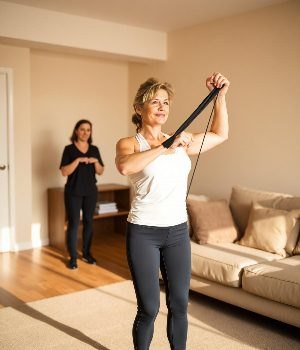
In-Home Sports Physical Therapy

Sports Rehab and Return-to-Activity Support Delivered to Your Home

Strength Works PT provides mobile sports physical therapy for active adults, athletes, weekend warriors, and post-surgical patients who want private one-on-one care without traveling to a clinic. Your therapist comes to your home or workplace and builds a plan around your injury, activity goals, current ability, and safe return-to-activity timeline. Care is available in Hicksville and across Nassau County.

Private 1-on-1 care
Mobile physical therapy at home or work
Based in Hicksville · Serving Nassau County, NY
No referral needed to start
Medicare and Aetna accepted · Direct pay for other plans
Licensed PT · Certified Strength and Conditioning Specialist

Sports Physical Therapy Built Around Your Activity Goals

Sports injuries can affect how you train, work, exercise, compete, or stay active. Strength Works PT brings sports physical therapy directly to your home or workplace so you can receive focused care without the added stress of traveling to a clinic while injured or recovering. Because care is private and one-on-one, your plan can be adjusted around your recovery stage, current ability, and the activities you want to return to.

Who Sports Physical Therapy Helps

In-home sports physical therapy may be a good fit for active patients who want focused rehab and safe return-to-activity guidance. This service may help:

  • Active adults recovering from injury
  • Weekend warriors
  • Student-athletes
  • Recreational athletes
  • Runners
  • Lifters
  • Busy professionals returning to exercise
  • Patients recovering after ACL surgery
  • Patients with rotator cuff-related shoulder concerns
  • Patients with sprains, strains, or overuse injuries
  • People who want clinical guidance before returning to sport or exercise

Sports Rehab Services

Sports Injury Rehab

Sports Injury Rehab is designed for non-surgical athletic injuries, sprains, strains, tendon irritation, and overuse concerns.

More on this

This may include injuries from running, lifting, court sports, field sports, recreational exercise, or weekend activity.

Your therapist can assess how you move, where symptoms appear, what activities are limited, and what your body needs before returning to higher-level activity.

Sports Injury Rehab may help with:

  • Sprains and strains
  • Tendon irritation
  • Running-related injuries
  • Overuse injuries
  • General athletic injuries
  • Mobility limitations
  • Strength deficits
  • Return-to-exercise concerns

This service is usually the best starting point when your injury is not tied to a recent surgery or a specific ACL or rotator cuff rehab protocol.

A dedicated page follows in a later phase; this section covers it for now.

ACL Rehab

ACL Rehab supports patients recovering after ACL injury or ACL reconstruction surgery.

More on this

This type of rehab usually follows a structured plan based on your procedure, surgeon instructions, healing stage, precautions, and functional goals.

Your therapist can help with early mobility, gait, strength, balance, control, and progressive return-to-activity planning.

ACL Rehab may include:

  • Range-of-motion work
  • Swelling and mobility support
  • Quad activation
  • Gait and crutch training
  • Strength progression
  • Balance and control training
  • Return-to-activity preparation
  • Coordination with surgeon instructions

Your surgeon’s guidance helps determine when rehab should begin and what precautions should be followed.

A dedicated page follows in a later phase; this section covers it for now.
Rotator Cuff Rehab

Rotator Cuff Rehab supports patients with shoulder pain, weakness, mobility limitations, overuse concerns, or post-surgical shoulder recovery related to the rotator cuff.

More on this

This may be helpful for athletes and active adults who rely on overhead motion, reaching, lifting, throwing, swimming, racquet sports, or strength training.

Your therapist can assess shoulder motion, strength, posture, movement control, pain behavior, and activity goals.

Rotator Cuff Rehab may include:

  • Gentle mobility work
  • Shoulder range-of-motion exercises
  • Progressive strengthening
  • Posture and movement education
  • Overhead activity preparation
  • Return-to-activity planning
  • Coordination with post-surgical precautions when applicable

The right plan depends on your evaluation, your symptoms, and whether your shoulder concern is surgical or non-surgical.

A dedicated page follows in a later phase; this section covers it for now.

Getting Back to Activity

Returning to exercise, sport, work, or normal activity after an injury is hard to judge on your own. Doing too little slows progress. Doing too much too soon can set you back.

Because your therapist is also a Certified Strength and Conditioning Specialist, that judgement can be measured rather than guessed — strength, mobility, endurance, balance, movement control and activity tolerance assessed properly, then a plan built around what your body can handle now.

This is not gym-style personal training. It is clinical assessment tied to your injury and recovery stage.

Before you book — this one is coaching, not treatment

Return-to-activity coaching is for a body that has already recovered. If something still hurts, start with rehabilitation — this is the step after.

Ask About Return-to-Activity Support

Older adults who want coaching rather than rehabilitation have their own page: Senior In-Home Personal Training.

Why Sports Rehab at Home Makes a Difference

Rehab happens where you actually train

Your therapist can see the surfaces you run on, the space you lift in, and the stairs you climb every day — then build the plan around them.

No driving on a fresh knee

Getting in and out of a car is one of the harder movements after ACL surgery, and it comes before and after every clinic visit.

Sessions that fit around work and training

Early mornings, lunch breaks, after work. Missed sessions are the most common reason rehab stalls short of full return.

Most people here aren’t professional athletes

They’re the ones still playing in a Sunday league at forty-two. Coaching a travel team and running the warm-up themselves. Out on a course most weekends. Lifting in a garage gym that started as a lockdown project and never stopped.

The injuries look like it — the shoulder from too many innings, the knee from a turf field, the back from deadlifting after three weeks off.

None of these people have three afternoons a week to give a clinic. That’s usually why rehab gets abandoned somewhere around “good enough”, and why the same thing goes again the following season.

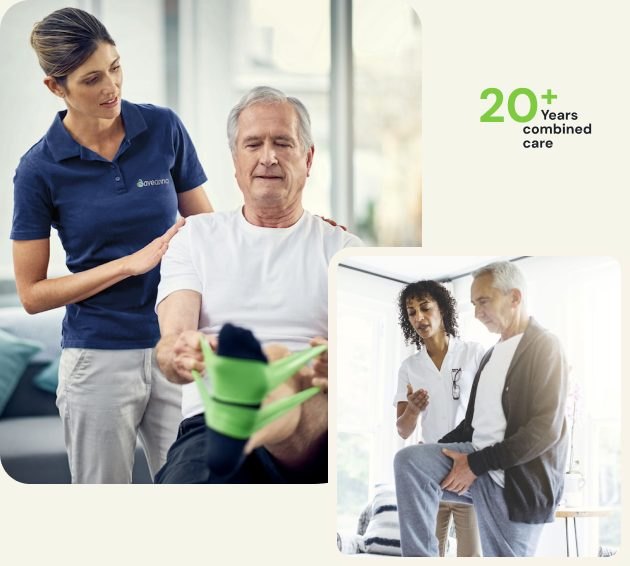
Photo slot — this section needs an image of a recreational athlete. Nothing in the current library fits; the closest option shows an older patient with a walking aid, which contradicts the copy.

What to Expect During Your First Visit

We start with what you’re trying to get back to.

The first visit is longer than the ones after it, and most of it is assessment.

Your therapist will usually
  • Ask what happened, and what you were doing when it did
  • Ask what you’re trying to get back to, and by when
  • Review any surgical instructions or precautions if you’ve had a procedure
  • Test the injured area — range, strength, control, how it behaves under load
  • Watch the movement that actually hurts, at the speed you actually do it
  • Check what’s compensating: the other leg, the trunk, the shoulder taking over
  • Agree what the first phase looks like and what the milestones are

“Better” is too vague to plan around. A date, a distance or a specific movement gives us something to build toward and something to measure against.

When Sports Physical Therapy Isn’t the Right Fit

Some injuries need a different first call.

This probably isn’t the right starting point if
  • The injury happened in the last day or two and hasn’t been assessed — a suspected fracture, a joint that gave way, or immediate swelling needs a diagnosis first
  • You can’t bear weight, the joint looks wrong, or there’s numbness below the injury. That’s urgent care, not a home visit
  • Your surgeon hasn’t cleared you to start yet. We work within their timeline, not around it
  • The real problem is pain you’ve had for years rather than an injury — that’s Chronic Pain Management
  • You’re not injured and want strength coaching. If you are an older adult, that’s Senior In-Home Personal Training

A mild strain that’s already improving after a few days usually resolves with sensible loading and time. We’ll tell you that rather than book you in.

Chronic Pain Management →

Simple, Private, and Built Around Your Goals

01

Call or Request an Appointment

Call (516) 357-4247 or request an in-home sports physical therapy evaluation online. We’ll ask about your injury, location, symptoms, sport or activity goals, surgery history if applicable, and current limitations.

Request an In-Home Sports PT Visit →
02

We Confirm Scheduling, Pricing, and What You Need

You will know the cost before anything is booked. We confirm a visit time that works around your day, explain how payment works, and tell you whether a physician referral will be needed for the length of care you are likely to need.

See Pricing & How Payment Works →
03

Your Therapist Comes to You

Your therapist comes to your home or workplace at the scheduled time. You do not need to drive to a clinic, sit in a waiting room, or purchase special equipment before your first visit.

04

Follow a Personalized Sports Rehab Plan

Your therapist evaluates your movement, strength, mobility, symptoms, balance, activity tolerance, and goals. Your plan is customized around your injury, your current ability, and the activity you want to return to.

Sports Physical Therapy Available in Hicksville and Across Nassau County

Strength Works PT provides mobile sports physical therapy in Hicksville and across Nassau County. We serve patients in nearby communities including Plainview, Syosset, Levittown, Bethpage, Massapequa, Westbury, Garden City, Mineola, New Hyde Park, East Meadow, Wantagh, and surrounding areas.

View All Nassau County Service Areas Hicksville Service Area →

Frequently Asked Questions

How do I know which sports rehab service fits my injury?

Sports Injury Rehab is usually best for sprains, strains, tendon irritation, and non-surgical athletic injuries.

ACL Rehab and Rotator Cuff Rehab are more specific tracks for knee or shoulder recovery.

What makes ACL Rehab different from general Sports Injury Rehab?

ACL Rehab usually follows a structured post-surgical plan based on your procedure, surgeon instructions, healing stage, and functional goals.

General Sports Injury Rehab is broader and may be used for non-surgical sprains, strains, and overuse injuries.

Do you provide rotator cuff rehab at home?

Yes. Strength Works PT provides in-home rehab for rotator cuff-related shoulder concerns when appropriate.

Your therapist can assess shoulder mobility, strength, symptoms, and activity goals.

What happens during the first visit?

Your first visit includes a review of your injury, surgery history if applicable, symptoms, movement, strength, mobility, activity tolerance, and goals.

Your therapist then begins building a personalized sports rehab plan.

Can I start rehab right after surgery?

You should follow your surgeon’s instructions about when physical therapy should begin.

Strength Works PT can help coordinate care around your post-surgical precautions and timeline.

Do I need a doctor’s referral?

No. You can begin with a direct evaluation.

New York’s direct access provisions allow a licensed physical therapist to evaluate and treat you without a physician referral, for up to 10 visits or 30 days from your first treatment, whichever comes first. If your care should continue beyond that, we will tell you what is needed and help you arrange it. If Medicare is paying for your care, your plan of care also needs to be signed by your physician, which we help arrange. Neither one holds up your first appointment.

How does payment work?

Strength Works PT is credentialed with Medicare and Aetna. Plans differ, so call and we will check yours before anything is booked.

If your plan is not one we bill, or you would rather keep the plan out of it, you can pay for your care directly. Either way you know the cost before the first visit.

See Pricing & How Payment Works →
Why choose mobile sports physical therapy?

Mobile sports physical therapy removes the need to drive to a clinic while injured, post-surgical, or limited by pain.

It also allows your therapist to build care around your real home, work, and activity environment.

Is this only for athletes?

No. Sports physical therapy can also help active adults, weekend warriors, and anyone trying to return safely to exercise or activity.

The plan depends on your goals and evaluation.

Is Sports Physical Therapy the same as Orthopedic Physical Therapy?

They overlap, but the focus is different.

Sports Physical Therapy focuses more on athletic injuries, return-to-activity goals, ACL rehab, rotator cuff rehab, and active patients returning to exercise or sport.

Orthopedic Physical Therapy →

Need Sports Physical Therapy at Home?

Schedule private one-on-one sports rehab with Strength Works PT. If a sports injury, surgery, pain, weakness, or movement limitation is keeping you from activity, Strength Works PT can bring sports physical therapy directly to your home or workplace. Care is available in Hicksville and across Nassau County.

Medically Reviewed by: Dr. Said Haschemi, DPT, CSCS
Review Date: Jan. 2026

Call (516) 357-4247